First, determine what this page is intended to help customers decide, then include the product name, applicable scenarios, key differentiators, and essential specifications. Detailed specifications should be placed on subsequent pages or linked to in additional materials. A single page is not a repository of information; no matter how small the text is, it cannot replace a clear reading sequence.
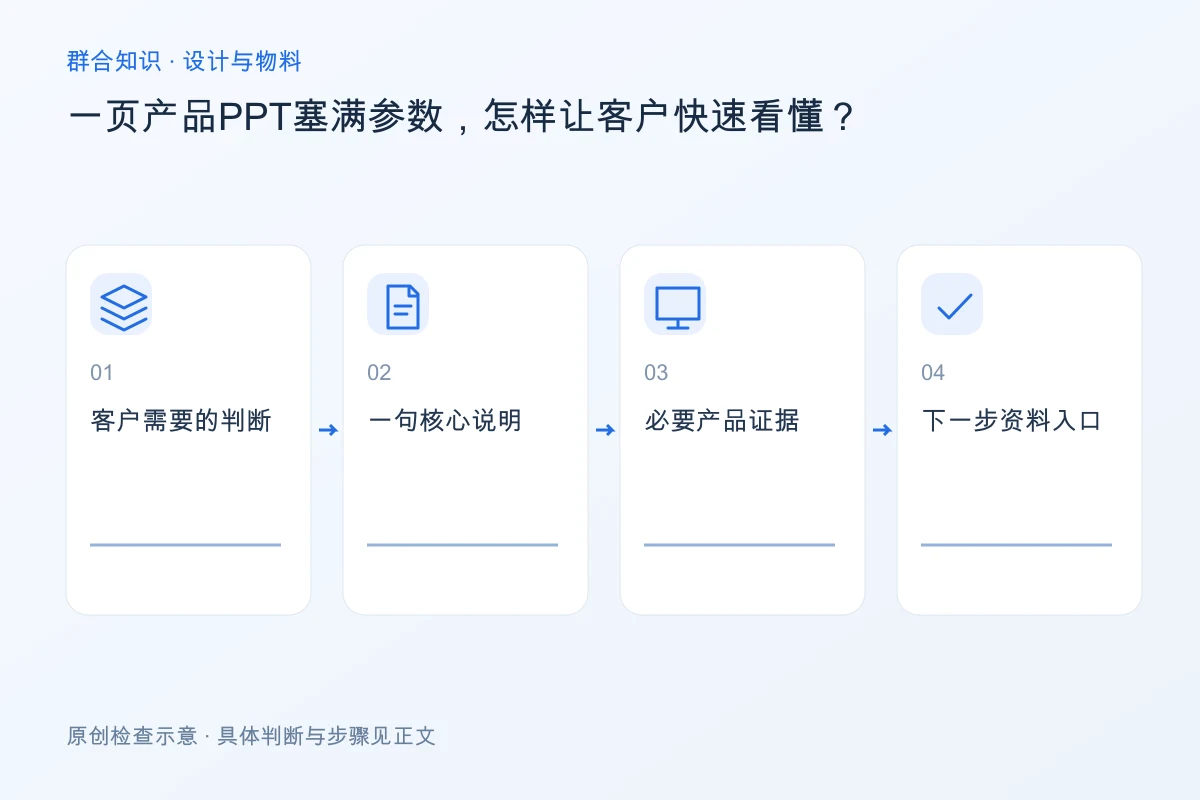
Start with the customer's question
For example, if a customer needs to determine whether a product is suitable for a particular usage environment, first present the relevant ranges and limitations; do not cram the company’s history, all certifications, and every single parameter onto the first screen at once. Application scenarios must be based on actual product documentation; do not fabricate performance specifications based on industry assumptions.
Establish a Clear Visual Sequence
The title should state what the product is; a brief description should explain its purpose; and product images along with a few key specifications should serve as evidence. Include units with numerical values, and align tables for easy comparison; avoid using multiple colored labels at the same hierarchical level. Use the original images and logos provided by the company.
Remove duplicate content rather than unnecessary boundaries
Remove duplicate slogans, decorative icons, and irrelevant descriptions; retain model numbers, restrictions, and source information. If two sets of parameters support different conclusions, split them into two pages. Mark unconfirmed metrics as “to be confirmed”; do not create a visually appealing data chart simply to fill the page.
Review Based on the Demonstration Scenario
View the content at actual screen sizes and viewing distances to ensure customers can read the key information without having to zoom in. Microsoft’s accessibility guidelines emphasize legible text, white space, and contrast, but there is no single font size that guarantees clarity in all settings. Double-check product models and documentation versions before delivery to avoid situations where visually appealing pages correspond to outdated products.